
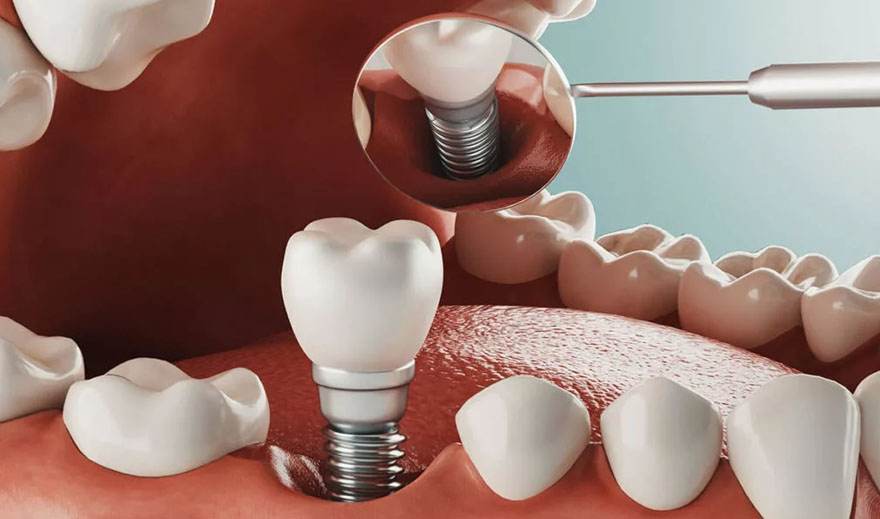
Dental Implants at Antalya Dental Hospital, Turkey
Dental Implants: What Are They, Benefits and Cost
A dental implant (also known as an endosseous implant or fixture) is a prosthesis that interfaces with the bone of the jaw or skull to support a dental prosthesis such as a crown, bridge, denture, or facial prosthesis or to act as an orthodontic anchor. The basis for modern dental implants is a biologic process called osseointegration, in which materials such as titanium or zirconia form an intimate bond to bone. The implant fixture is first placed so that it is likely to osseointegrate, then a dental prosthetic is added. A variable amount of healing time is required for osseointegration before either the dental prosthetic (a tooth, bridge or denture) is attached to the implant or an abutment is placed which will hold a dental prosthetic/crown.
Home of the most precise dental implants.
There are situations when losing a tooth is inevitable. Although some do not think much of replacing the missing teeth, it can often be vital to your health and your confidence to maintain your mouth’s full functionality and comfort.
Missing teeth can affect the way you look, chew and speak. Leaving an empty space in your mouth after losing a tooth can cause your other teeth to shift and trigger other problems like jawbone deterioration.
At Antalya Dental Hospital, our implantologists offer dental implants with superior stability to patients who are looking for a long-term solution to missing teeth.
Dental implants improve our patients’ quality of life by:
- Offering a long-lasting solution to missing teeth
- Behaving like natural teeth
- Restoring the mouth to its most natural state
- Preventing further bone loss
- Preventing facial sagging and premature aging
- Keeping adjacent teeth stable
- Rebuilding the aesthetics of a smile
- Renewing their confidence and self-esteem
Dental Studio is the best dental implant clinic in Antalya with the highest success rate.
Guaranteed to last a lifetime.
A dental implant is a titanium post that is surgically placed into the jawbone as a support for a replacement tooth. Unlike removable dentures or bridges, dental implants offer superior stability, functionality and will not affect neighboring healthy teeth. Your implants will mimic the strength of your natural teeth and will preserve the vitality of your jawbones.
Need more advice?
If you need free and impartial advice about your oral health, contact our Antalya Dental Hospital Helpline by email or call +90 242-999-1227 (local rate call in the Turkey).
Our Antalya Dental Hospital Helpline is completely confidential and has helped almost 20,000+ people. Contact our experts by telephone, email or online enquiry, Monday to Friday, 08:00 - 18:00.


Frequently Asked Questions About Dental Health
FAQs
Our FAQs are the most commonly-asked questions put to our Dental Helpline over the last year. If you have a question for us, you can ask our Dental Helpline by telephone or email. Alternatively, please take a look at our library of oral health information, which contains a wide range of oral health advice in an easy-to-understand Q&A format.
Early tooth decay does not tend to show many physical signs. Sometimes the tooth looks healthy, but your dental team will be able to see from an x-ray whether you have any decay under the enamel, any possible infections in the root, or any bone loss around the tooth.
X-rays can help the dental team to see in between your teeth or under the edge of your fillings. Finding and treating dental problems at an early stage can save both time and money.
In children, x-rays can be used to show where the adult teeth are and when they will appear. They are also used in the same way for adults when the wisdom teeth start to come through.
There are many toothpastes, and some are designed for different needs. There are toothpastes for gum health, sensitive teeth and for smokers, ones with anti-bacterial agents, and others which help to restore the natural whiteness of your teeth. Your dental team can recommend the most suitable toothpaste for your needs.
People who smoke may find they are more likely to have bad breath than non-smokers. Fresh-breath products such as mouthwashes may help to disguise the problem in the short term, but will not cure it.
The dental team will need to know your medical history and about any medicines that you are taking. This includes any regularly prescribed medicines from your doctor or another health provider (such as HIV medications and Hormone Replacement Therapy). To treat you properly, they also need to know your HIV status and whether you have had hepatitis.
Dentists will not judge or criticise you. They are there to help improve your oral health and answer any questions or concerns you may have about your mouth, teeth and gums.
Your Best Smile Starts Here
Follow along as Antalya Dental Hospital expert dentists share the latest oral health trends that impact you and your family’s overall health. Dentistry and Oral Health Blog is a rich source of information about dentistry, dental care, tips, news and more. Subscribe to our blog, newsroom and social media.
My fear of the dentist
Dentophobia (odontophobia), or fear of dentists, is a common phobia
Visiting a dental hygienist or dental therapist
What are dental hygienists and dental therapists? Dental hygienists and dental

Transfer 3D computer tomography (CT) via the Internet
Computed tomography of maxillofacial department (teeth picture in 3D) -